
Psychotrauma from a mop: experts diagnose the forensic examination
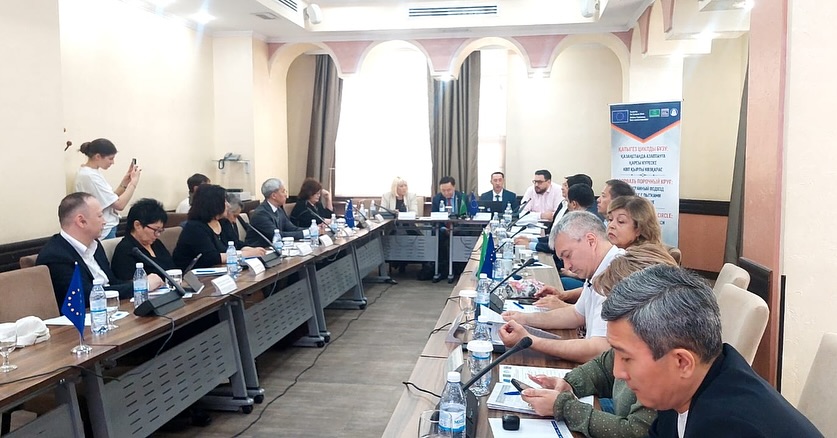
Contradictory conclusions, unprofessionalism, excessive workload, improperly formulated questions by investigators, and dozens of other factors affecting the quality of forensic medical examinations in our republic were discussed during a roundtable meeting.
On April 29, a discussion on the problems of forensic medical expertise in cases involving torture (and beyond) took place in Almaty. Three groups directly involved in torture investigations — lawyers and human rights defenders, prosecutors, and forensic experts themselves — sought to determine what the system lacks in order to produce high-quality expert conclusions that would not be subject to doubt.
Four key issues were placed on the agenda:
• human rights and law enforcement analysis of forensic expertise;
• institutional and procedural mechanisms for improvement;
• development of alternative (non-state) forensic expertise;
• independence and admissibility of forensic expertise as evidence, especially in cases involving human rights violations.
Forensic Expertise — Sometimes the Naked Queen of Court Proceedings
In her welcoming remarks, Matilda Bogner noted that “forensic medical expertise and the principle of equality of arms are closely interconnected, because forensic expertise can seriously influence the outcome of court proceedings.”
Dmitry Nurumov from the regional office of Penal Reform International further emphasized the difficulties surrounding torture investigations by pointing out that such cases “always face two problems — both during the investigation and during compensation for harm.” He stressed the need for perpetrators to receive “punishments in line with international standards, while victims receive adequate compensation.” In these situations, he added, without expert examinations “it is very difficult, and often impossible, to investigate torture cases, especially when they do not have an obvious physical character.”
Marat Zhusupov, an independent expert of the Coalition of NGOs of Kazakhstan Against Torture, listed at least two dozen problematic issues. He began with the fact that “in medical universities, forensic medicine is taught as an elective course for only one week, whereas it should be mandatory and extended to two months.”
He also proposed strengthening the Criminal Code with provisions establishing punishment for experts who falsify findings.
The relevance of this issue can be seen in a number of publications concerning the death of Anatoly Reybant, a resident of Petropavlovsk, allegedly linked to police violence. Despite the fact that falsified conclusions were later disproven, none of the “experts” (the quotation marks are intentional) have been held accountable — and it now appears they never will be. As a result, other participants in the violence also escaped responsibility.
Another example came from the practice of the Kazakhstan International Bureau for Human Rights and Rule of Law. Marat Azhimoldayev, a young resident of the Enbekshikazakh district in the Almaty region, was sentenced to 18 years in prison after being subjected to torture and, according to an analysis of the case materials, falsely accused of murder. A significant role in the case was played by an expert conclusion issued by a Mental Health Center that, according to findings by the anti-corruption service, had produced around 800 unlawful expert opinions.
Regarding private experts, the speaker continued, inequality exists due to differing payment sources and the risk of affiliation between clients and experts. Moreover, it is primarily defense lawyers who turn to private experts, and lawyers are already in an unequal position in court proceedings by default.
Not all experts document old injuries; police officers are often present during examinations, which itself acts as a deterrent; not all requirements of the Istanbul Protocol are fulfilled; there is no unified template for forensic medical examination reports; and there are no clear deadlines or procedures for appealing decisions. These were only some of the shortcomings he identified, all of which contribute to society’s understandable distrust of experts.
Gulnar Suleimenova, a professor at the Adilet Higher School of Law and a practicing lawyer, cited an example from a rape case in which police seized examination materials 45 days later, without video recording, and with incorrect identification of the person to whom the items belonged. Ultimately, experts were expected to issue conclusions based on this accumulation of procedural violations.
Is Everything Subjective?
Timur Kryldakov, Deputy Head of the Pre-Trial Investigation Service of the Prosecutor General’s Office, said he did not fully agree that the country’s forensic examination system was mired in problems, though he shared some concerns expressed by previous speakers.
He stated that investigators are often forced to turn to private experts because state experts are overloaded, and from the investigation’s perspective there is no difference between the two: both, in his opinion, are independent. However, he acknowledged that contradictory expert conclusions often emerge during court hearings, and in such situations the final decision is left entirely to the judge.
According to Kryldakov, 90 percent of torture cases involve psychological trauma, and in such situations “everything is subjective.” For some people, he argued, merely being told they could end up in prison is enough to cause psychological trauma. In response, a representative of the Center for Forensic Expertise countered that there are, in fact, objective signs of psychological trauma and that all examinations are based on scientific methodology.
Using two examples, Roza Akylbekova assessed both the quality and consequences of expert examinations:
“Our doctors did not even record the bones protruding from an open fracture (…). As for psychological torture — not a single criminal case has been opened in Kazakhstan, even though one boy lost his mind after being told, ‘We’re going to shove a broom handle up your ass right now.’”
In addition to identifying problems, participants presented the state with several dozen recommendations aimed at improving the overall system of forensic medical expertise. Judging by how attentively representatives of state institutions noted down the proposals, one may cautiously expect some movement forward. Of course, not immediately and not in every area, but given existing practice, the hopes appear realistic.
The roundtable “Improving Forensic Medical Expertise in Cases Related to Torture and Its Role in Criminal Proceedings” was organized within the framework of the project “Breaking the Vicious Circle — A Multifaceted Approach to Combating Torture in Kazakhstan,” supported by the European Union. The organizers were the Taldykorgan Human Rights Center, the Kazakhstan International Bureau for Human Rights and Rule of Law, and the Central Asia office of Penal Reform International.